In South Dakota, North Dakota, and surrounding states, manufacturers and brand owners frequently have to make the surprisingly difficult choice of which printing technique will best preserve their product. Making the incorrect decision can result in parts that later fail quality inspections, faded logos, or peeling ink.
This is where knowing your Dakota screen printing options comes in handy. Whether you’re marking industrial components, clothing, or signage, selecting the appropriate method early on reduces rework, costs, and time.
What Makes Screen Printing the Right Choice for Certain Parts?
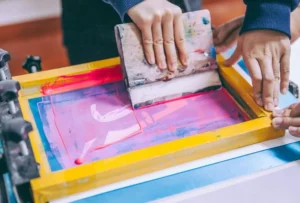
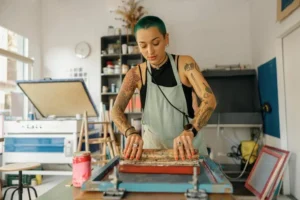
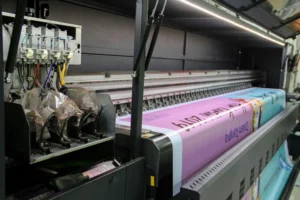
Screen printing is among the most dependable and traditional industrial printing techniques. It produces bold, opaque, long-lasting results by forcing ink through a mesh stencil and onto a surface.
It is most successful in situations where:
- The substrate is smooth or lightly contoured
- High-opacity vivid colors are required (particularly on dark backgrounds)
- Large production runs are necessary for reduced per-unit costs
- Longevity under outdoor conditions or heavy use is important
Signage, clothing, promotional goods, and flat industrial parts like nameplates or control panels are some of its typical uses.
Comparing Print Methods on Cost, Durability, and Turnaround
Not every task requires the same approach. Consider the following things buyers must keep in mind:
- Screen printing: preferred for smooth, large quantities, vibrant colours, and not suited to curved objects
- Pad printing: preferred for curved, textured, and unusual objects where screen printing cannot be applied
- Molding of plastic: preferred for parts that require branding to be integrated in the manufacturing process
Comparing the two processes briefly will help in understanding their pros and cons: screen printing is the ideal process to use when printing on flat and curved surfaces; it produces great color and cost-effectiveness on large volumes. On the other hand, pad printing is ideal for printing on irregular and curved surfaces; it is thus better for small components.
When Does a Curved or Detailed Part Call for a Different Approach?
Many customers run into this problem because their part isn’t flat enough for screen printing to yield clear results. Tampo printing fills that gap.
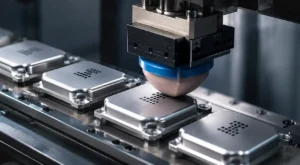
This technique, also called pad printing, transfers ink from an etched plate onto the product using a soft silicone pad. The pad’s flexibility allows it to print on textured surfaces that would otherwise be difficult for a flat screen, wrap around curves, and dip into recessed areas.
Common applications are:
- Medical devices with round bodies
- Automotive parts with curved surfaces
- Promotional products such as pens or golf balls
- Housings for electronics with buttons or irregular surfaces
However, the drawback lies in scale, as pad printing is not well-suited to mass production on a flat surface.
Is Plastic Molding a Better Fit for Complex Manufacturing Needs?
In some cases, it is not about what kind of printing to use; it is about whether the printing should be used at all. In cases where companies manufacture custom plastic parts, it is better to brand or mark the parts through the molding process than to print afterward.
It becomes more important when it comes to businesses that are considering plastic molding Utah processes because there might be instances when the pieces would require consistent branding on thousands of identical units, or markings that need to survive years of wear without fading.
Advantages of this integrated approach include:
- Minimal production steps because the marks are done at the time of molding
- Uniformity in larger quantities
- Marks that become an integral part of the part itself
- The possibility of less ink wear throughout the lifespan of the product
It should be mentioned that it is more advantageous to consider this type of design before the manufacturing process starts, as it will definitely cost much less compared to reworking existing molds.
Common Mistakes Buyers Make When Choosing a Print Method
When choosing a printing process, even experienced buyers encounter preventable issues. Early detection of these can prevent delays or reprints in a production run.
Some common mistakes include:
- Disregarding the surface geometry: Choosing screen printing on a curved or textured surface frequently results in poorly transferred designs
- Miscalculating production runs: Selecting a slow and intricate technique for mass production can easily exceed the set budget and deadline
- Neglecting the testing stage: Designs which seem fine initially might wear off when exposed to sunlight or various chemical agents
- Too little, too late: Not deciding on branding until after the mold has been created leaves no room for design integration within the part
These problems are typically avoided by asking a few questions up front: What surface am I printing on? What is the required number of units? Will there be a lot of wear, moisture, or heat on this part? Does branding need to be added after the fact or integrated into the manufacturing process itself?
Making the Right Call for Your Project
The shape of your unit, the size of your production run, the environment the product will be exposed to, and your budget all influence which printing method is “best.” Screen printing is often preferred in flat, high-volume jobs. Pad printing is typically required for curved or detailed items. Additionally, producers of large-scale plastic components ought to think about whether integrated molding is a more long-term solution than any additional printing stage.
Instead of promoting a one-size-fits-all solution, Pad Print USA works with manufacturers, distributors, and brand owners to determine precisely which approach fits their parts, timelines, and budgets. Before you commit to a process that might not work, get in contact with us for a clear recommendation if you’re not sure which process is best for your next production run.