Manufacturers of medical devices face a special challenge: branding and markings must endure years of handling, chemical exposure, and sterilization without ever becoming unreadable. Making the incorrect choice can have an impact on product safety and compliance, in addition to being a cosmetic concern.
This is the reason why so many companies researching alternatives in the California Custom USA range are raising the same issue: is it best to put the marks right in during the molding process, or is it better to print them after the part has been molded? The answer to the question depends upon the product itself, timing, and intended usage.
Why Does the Marking Method Matter So Much for Medical Devices?
While consumer goods may be more loosely regulated, medical devices have very high regulatory and longevity requirements. Any markings that smear, wear off, or are difficult to read become much more problematic; they pose traceability, regulatory compliance, or clinical confusion risks.
Factors which highlight the importance of marking methods in this sector include:
- Cycles of autoclave sterilization
- Exposure to alcohol, antiseptics, and other strong chemicals
- Extended lifespan of products, sometimes for many years of use
- Regulation related to lot numbers and unique device identifiers (UDIs)
Thus, in light of this, manufacturing companies cannot afford to overlook marking methods. They must be considered simultaneously while designing the parts.
Building Markings Into the Mold vs. Printing Afterward
Branding, part numbers, or instructions can typically be applied to a medical device in one of two ways: either integrated into the mold or applied after the part is manufactured.
It makes sense to build the marking into the mold if:
- Large quantities of the item will be made
- The marking is meant to be permanent and integrated into the product
- There is no more development work being done on the design
Otherwise, it would make more sense to print after the manufacturing process if:
- There is room for further development of the design
- The design is not yet set in stone and may require customization
- Information needs to be customized or changed later
It depends on production volume, design stability, and the degree of flexibility required by the manufacturer after parts are molded; neither strategy is inherently “better” than the other.
Real-World Signs You’ve Chosen the Wrong Marking Method
Sometimes the best way to figure out which approach works best is to examine what goes wrong when it doesn’t. When the marking approach doesn’t match the part, a few warning signs typically appear quickly on medical device production lines.
Red flags that are common are as follows:
- Text or logos fading after just a few sterilization cycles: Usually a sign printing was used where molded-in marking was needed.
- Rising per-unit costs on large orders: Often traced back to printing every unit individually instead of building marking into the mold
- Inspection failures due to inconsistent placement: A common issue when print alignment varies slightly from part to part
- Delays from constant tooling changes: A sign the design wasn’t stable enough to justify molding in the marking yet
- Inability to add lot numbers or serial codes: happens when everything was molded in, leaving no room for variable data
It is much simpler to identify these problems early on than to address them after a production run has started. Most of the time, these issues can be completely avoided by briefly reviewing volume, design stability, and regulatory requirements before committing to a method.
Where Plastic Injection Molding Fits Into the Process
In the case of manufacturers who manufacture plastic components in large quantities, plastic injection molding utah provides an option for performing both manufacturing and branding within the same process. Instead of creating a molded part and then branding it, the marking can be molded into the cavities.
The method provides the following practical benefits:
- One process instead of two, which cuts down on production time
- Immutability of markings, since they are embedded into the substance
- Consistency among thousands of items alike
- Less risk of printing mistakes or misalignment
However, this may result in a lack of flexibility, as it is difficult to change the markings in a mold once created, and the mold may require modification, increasing costs and the time of delivery. Therefore, the decision on the inclusion of marks should be made in the early stages of the design process.
When Specialized Printing Still Makes Sense
Though there are many benefits to the marking process, there are numerous occasions when post-mold printing is the best choice. The need for varying data such as serial numbers, batches, or expiry dates means that this data cannot be incorporated into a static mold.
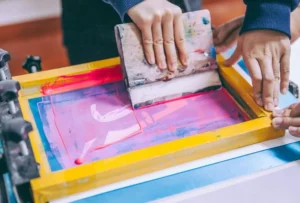
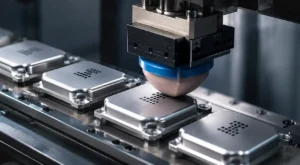
That is when the specialized medical printing services come into play. Such processes are created specifically to withstand sterilization and contact with chemicals while also permitting the addition of varying data to each particular part post-molding.
Some common applications for this method are:
- Systems that need individual identification for each product
- Objects which are currently in development and not produced in large numbers
- Systems that need identification based on regional laws and requirements
- Systems in which there is still some flexibility in design
In many practical cases, a combination of the two methods is used by manufacturers.
Making the Decision for Your Product
When deciding between mold-integrated marking and post-production printing, it’s important to match the technique to your product’s volume, design stability, and regulatory requirements rather than selecting the “best” approach overall. Markings incorporated into the mold are often advantageous for finalized, high-volume designs. After-the-fact specialized printing is typically required for devices that require variable or changeable information.
Pad Print USA assists medical device manufacturers in determining which parts require printing afterward and which should be molded with permanent branding. The objective is a marking strategy that meets the product’s volume, durability requirements, and legal requirements from the outset.