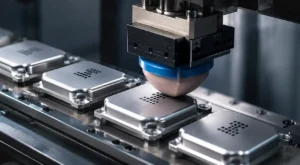

Metal parts undergo many things before they ever get to the customer; they get machined, handled, shipped, and used for years in harsh environments. Should the marking on the part wear off, scratch off, or become unreadable much too early, then that is when it can create real problems for traceability, branding, and quality control.
It is for this exact reason that metal part marking has become such an important process within manufacturing, not just a supplementary one. It must be able to withstand whatever the part itself can endure.
What Makes Metal Marking so Challenging Compared to Other Materials?
Metals present challenges that plastics or paper cannot present. They can have rough surfaces, be very reflective or oxidize, all of which have an effect on how the ink adheres and how it stays put.
Typical problems involve:
- Resistance to regular ink because of smooth or coated surfaces
- Contact with oil, solvents, and cutting fluids in manufacturing processes
- Outdoor or industrial conditions leading to rapid wear
- High-contrast and scannable barcodes for inventory management
As a result of these considerations, metal marking involves more than simply putting ink on metal; it requires a process designed for its unique needs.
Regional Capabilities: Screen Printing Across the West Coast
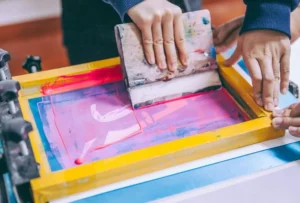
The West Coast has a significant capacity for this type of work, and manufacturers frequently search regionally for marking services. Oregon screen printing is mentioned in the third section of many production discussions as a dependable choice for businesses requiring long-lasting, high-volume marking without lengthy shipping delays.
Screen printing is a good process to use for metals if:
- The surface is fairly flat to allow for ink to pass through evenly
- High quantities are required to reap cost benefits
- Strong, visible marks must be produced
- Time is an important factor, as screen printing can scale up effectively
A partnership with a local vendor will also help to streamline logistics for companies which want faster turnaround times from manufacturing to labeling.
Is Screen Printing Always the Right Fit for Metal Components?
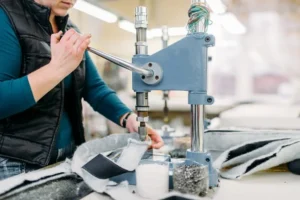
Not always; it all depends on the type of the part and the exact requirements of the job. Simple flat parts like brackets, panels, and plates are usually great for screen printing. However, curved, rough, or oddly-shaped metal parts are better off being printed with the pad printing method.
Some considerations that the manufacturers must consider include:
- Is the surface smooth enough for uniform application of the ink?
- Does the marking require a high level of resistance against abrasion and chemicals?
- What is the size of the production run?
- Is speed or accuracy more important?
Such questions usually help you find the best approach very quickly, particularly if the conversation is with an expert printer who has plenty of experience dealing with metals.
Comparing Options Across California and Beyond
Screen printing California services from manufacturers located in the south are also inclined to examine their counterparts because of proximity, quicker service, and understanding of the local industry demands. In whatever state one may choose to source from, be it Oregon, California, or somewhere else, principles of metal marking remain the same.
A number of characteristics that one should take into account when evaluating companies are:
- Experience in working with metal substrates, not only plastic or textile
- Durability test experience (abrasion, chemicals, ultraviolet light)
- Quality consistency for bulk orders
- The ability to work with text as well as complex logos or codes
Selecting a vendor that specializes in dealing with specific metals means that you won’t run into any expensive problems later on, such as marks that seem good at first but then quickly go bad once in the field.
Signs Your Current Metal Marking Won’t Last
There are a number of indications that can warn us that this process is not appropriate for the particular section. The one that comes first to mind would be fading after just several months of using or touching it.
Edge chipping is another problem often encountered and is typically a result of secondary handling after machining and shipping. Poor barcode scanning may also be indicative of this problem because poor contrast means the codes cannot be read.
Discolorations or rust at the sites where the marks have been made should also be considered, since such changes may indicate that the marking process has somehow interfered with the protective layer of the material. Differences in outcomes from run to run generally point to unsuitability for mass production.
Getting Marking Right the First Time
Selecting the appropriate marking technique is crucial rather than optional because metal parts are subjected to harsher conditions than most other materials. While curved or intricate components might require a completely different strategy, flat, high-volume parts frequently work well with screen printing. For manufacturers who value longevity and speed of turnaround, regional suppliers on the West Coast provide good choices.
Before you commit to a production run, Pad Print USA can assist you in determining which marking technique will work best. To discuss your project and receive a recommendation based on the material, shape, and production volume of your part, get in touch with us right now.